Visualizzazione post con etichetta Art History Lessons. Mostra tutti i post

Vermeer and the light

0
Donna al virginale (1670-72c) 51.7 x 45.2 cm
In these autumn days when you start to spend more time at home, I like to open the curtains to let in more light into the rooms. The atmosphere that is created reminds me of the paintings of Vermeer and the delicacy with which the light settles on the faces, objects, fabrics.
I have already dedicated a post to this extraordinary artist and today I propose a new series of works.
What do you think?


In queste giornate d'autunno in cui si inizia a passare più tempo a casa, mi piace aprire le tende per fare entrare più luce possibile nelle stanze. L'atmosfera che si crea mi ricorda i quadri di Vermeer e la delicatezza con cui la luce si posa sui volti, sugli oggetti, sui tessuti.
Ho già dedicato un post a questo straordinario artista e oggi vi propongo una nuova serie di opere.
Cosa ne pensate?
Read More

Depero

0


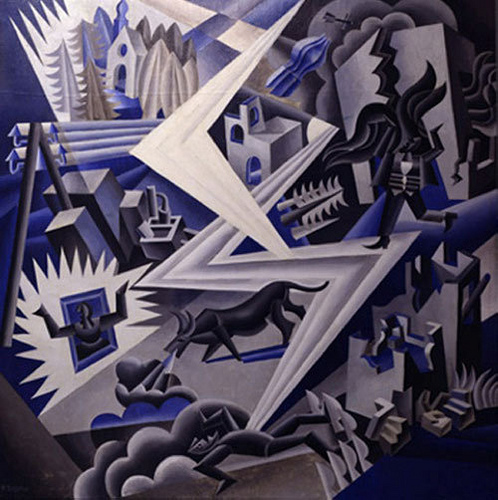
Today I want to talk about Fortunato Depero, an Italian artist of extraordinary and which most people do notknow the life and works, althoughsome of them yet part of our daily lives.
Fortunato Depero ( 1892 – 1960) was an Italianfuturist painter, writer, sculptor and graphic designer. It was with Balla in 1915 that he wrote the manifesto Ricostruzione futurista dell’universo ("Futurist Reconstruction of the Universe") which expanded upon the ideas introduced by the other futurists. In 1919 Depero founded the "Casa d'Arte Futurista" (House of Futurist Art) in Rovereto, which specialised in producing toys, tapestries and furniture in the futurist style. In 1925 he represented the futurists at the Exposition Internationale des Arts Décoratifs et Industriels Modernes (International Exposition of Modern Industrial and Decorative Arts). The 1928 saw Depero move to New York City, where he experienced a degree of success, doing costumes for stage productions and designing covers for magazines including MovieMaker, The New Yorkerand Vogue, among others. In 1930 he returned to Italy. In 1930 he returned to Italy and began a fruitful collaboration with Campari, and few people know that the bottle of Campari Soda was designed by Depero. The famous single-dose bottle of a truncated cone was designed in 1932 by Fortunato Depero and has remained as such, without undergoing redesign or adaptation to our times. This is a piece of futurism still alive, has succeeded in bringing the art in life.


Oggi vi voglio parlare di Fortunato Depero, un artista italiano straordinario e di cui la maggior parte delle persone non conosce né la vita nè le opere, seppure alcune di esse facciano ancora parte della nostra vita quotidiana.

Fortunato Depero (1892 –1960) è stato un pittore, scrittore, scultore e designer futurista. Nel 1915, con Balla ha scritto il manifesto Ricostruzione futurista dell'universo ("Futurist Reconstruction of the Universe"), che ha ampliato le idee introdotte dai futuristi. Nel 1919 Depero fondò la "Casa d'Arte Futurista" (Casa d'Arte Futurista) a Rovereto, che si è specializzata nella produzione di giocattoli, arazzi e mobili in stile futurista. Nel 1925 ha rappresentato i futuristi alla Exposition Internationale des Arts Décoratifs et Industriels Modernes (Esposizione Internazionale di Arti Moderne industriali e decorativi). Nel 1928 Depero si è trasferito a New York, dove ha avuto un certo successo, realizzando costumi per produzioni teatrali e progettando copertine per riviste tra cui Movie Maker, The New Yorker e Vogue. Nel 1930 rientra in Italia e inizia una proficua collaborazione con Campari, e pochi sanno che la bottiglia di Campari Soda è stata disegnata da Depero. La famosa bottiglietta monodose a tronco di cono è stata disegnata nel 1932 da Fortunato Depero ed è rimasta tale e quale, senza subire restyling o adattamenti ai nostri tempi. E’ un pezzo di futurismo ancora vivo, che è riuscito a portare l'Arte nella vita. 


Vermeer

0
ragazza con l'orlecchino di perla o ragazza col turbante (1665)
Johannes, Jan or Johan Vermeer was a Dutch painter. Vermeer was a moderately successful provincial genre painter in his lifetime and he produced relatively few paintings.
Vermeer worked slowly and with great care, he painted mostly domestic interior scenes of middle-class life. Almost all his paintings are set in smallish rooms, they show the same furniture and decorations in various arrangements and they often portray mostly women.
 
 
Johannes, Jan o Johan Vermeer è stato un pittore olandese. Vermeer durante la sua vita ha avuto un un discreto successo in provincia come pittore di genere e la sua produzione è limitata a pochi quadri. Vermeer lavorava lentamente e con grande cura, dipinse soprattutto scene di interni domestici della borghesia. "Quasi tutti i suoi quadri sono ambientati in piccole stanze, mostrano gli stessi mobili e le decorazioni in varie disposizioni e spesso ritraggono prevalentemente donne.


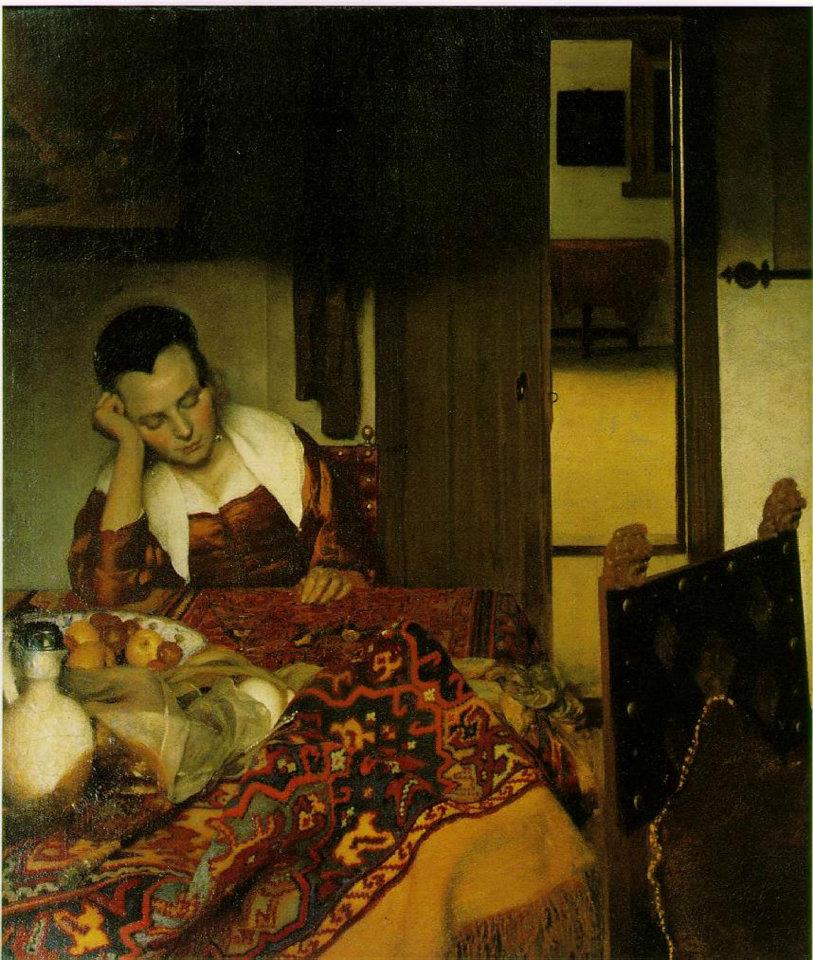
A woman asleep (1657).
Allegoria della pittura (1666 ca)
donna alla finestra (1662)
For a long time, relatively little was known about Vermeer's life. He seems to have been devoted exclusively to his art, living out his life in the city of Delft. The only sources of information were some registers, a few official documents and comments by other artists.
 
 
Per molto tempo, si è conosciuto relativamente poco della vita di Vermeer. Egli sembra si sia dedicato esclusivamente alla sua arte e a vivere la sua vita nella città di Delft. Le uniche fonti di informazione sono alcuni registri, pochi documenti e commenti di altri artisti ufficiali. 

Donna che si scrive una lettera e domestica (1670 c)
Donna con cappello rosso Girl with the Red Hat (1665 - 1666)
giovane donna con collana di perle (1664c)
Giovane donna seduta a un virginale (1670-72c) A Young Woman Seated at a Virginal
L'Astronomo (1668)
L'ufficiale e la ragazza (1655-60)
La Femme portant une balance (1662-5)
What remains are his wonderful works, where the light illuminates scenes set in a poetic silence and where women appear with looks sweet and gentle movements. The characteristic of many of his paintings is the presence of small flashes of light, often reflected by pearls that appear in his compositions. This detail makes it a great artist and one of the best painters in the light of the '600 Dutch.
.
Ciò che rimane sono le sue opere meravigliose, dove la luce illumina scene immerse in un silenzio poetico e dove appaiono donne con sguardi dolcie e gesti delicati. La caratteristica di molti suoi quadri è la presenza di piccoli guizzi di luce, spesso riflessi da perle che appaiono nelle sue composizioni. Questo dettaglio lo rende un grande artista e uno dei migliori pittori della luce del ‘600 olandese. 

Le Verre de vin (1658)
Ragazza che legge una lettera davanti ad una finestra aperta - Girl Reading a Letter at an Open Window - (c. 1657).
The Kitchen Maid - La Lattaia


William Adolphe Bouguereau

0

William-Adolphe Bouguereau (1825 – 1905) was a French academic painter and traditionalist. In his realistic genre paintings he used mythological themes, making modern interpretations of classical subjects, with an emphasis on the female human body. Bouguereau was a staunch traditionalist and during his life he enjoyed significant popularity in France and the United States, was given numerous official honors. By the early twentieth century, Bouguereau and his art fell out of favor with the public, due in part to changing tastes. In the 1980s, a revival of interest in figure painting led to a rediscovery of Bouguereau and his work.
He created an idealized world and his almost photo-realistic style is amazing. I love his work because of the sensitivity of shapes and colors. And you?


William-Adolphe Bouguereau (1825 - 1905) è stato un pittore accademico francese e tradizionalista. Nei suoi quadri di genere realistico ha rappresentato temi mitologici, interpretando in chiave moderna i soggetti classici, con una particolare attenzione al corpo femminile. Bouguereau era un tradizionalista convinto e durante la sua vita ha goduto di notevole popolarità in Francia e negli Stati Uniti ed è stato insignito di numerosi riconoscimenti ufficiali. All'inizio del XX secolo, Bouguereau e la sua arte non ha più incontrato il favore del pubblico, dovuto in parte al cambiamento dei gusti. Negli anni '80, una ripresa di interesse per la pittura di figura ha portato ad una riscoperta di Bouguereau e della sua opera.
Ha creato un mondo idealizzato e il suo stile fotorealistico è sorprendente. Io adoro le sue opere per la delicatezza delle forme e dei colori. E voi?


Norman Rockwell

0


Norman Percevel Rockwell (February 3, 1894 – November 8, 1978) was a American painter and illustrator. His works enjoy a broad popular appeal in the United States for their reflection of American culture. Rockwell is most famous for the cover illustrations of everyday life scenarios he created for The Saturday Evening Post magazine for more than four decades. Rockwell incorporated photography and design, managing to encompass an entire story in a single frame. It is hardly surprising that the largest and most important collectors of Norman Rockwell Steven Spielberg and George Lucas, who in 2010 lent some works for the exhibition "Telling Stories" at the Smithsonian American Art Museum in Washington. Looking at his work is like stepping back in American culture. They are fabulous!

Norman Percevel Rockwell (3 febbraio 1894 - 8 novembre 1978) è stato un pittore e illustratore americano. Le sue opere sono molto  popolari negli Stati Uniti poiché rappresentano perfettamente la cultura americana. Rockwell è famoso per le illustrazioni con scene di vita quotidiana che ha realizzato per la rivista The Saturday Evening Post per più di quattro decenni. Rockwell integrava fotografia e disegno, riuscendo a racchiudere un’intera storia in un unico fotogramma. Per questo non stupisce che i maggiori e più importanti collezionisti di Norman Rockwell sono Steven Spielberg e George Lucas, che nel 2010 hanno prestato alcune opere per la mostra "Telling Stories" presso lo Smithsonian American Art Museum di Washington. Guardare le sue opere è come immergersi nella cultura americana. Favolose!


Norman Rockwell Museum
Website
Related Posts Plugin for WordPress, Blogger...